Archive for Allied Member Insights

Refining Your Destination’s Target Market to Gain an Edge

Broad Appeal Is Costing You Bookings, Precision Is the Fix


Destinations that succeed today are those that understand not just where they are, but who they are best positioned to serve. As tourism becomes more competitive and audiences more diverse, a clear sense of target market is no longer optional; it is essential.

Our reflections and efforts are honed from years of local, national and international work, and were further enlightened by the CTO’s Sustainable Tourism Conference in Belize, where the various economic discussions reinforced an important point: the most effective destinations are not those that try to appeal to everyone, but those that understand clearly who they are best placed to serve.

The Silver Economy: Unlocking High-Value, Experience-Driven Travel

A perfect example is the Silver Economy, which represents a demographic that participates across multiple tourism sectors, rather than fitting neatly into one. With that mindset, it is clear that this economy requires a more creative approach. Today’s more mature travelers (who contribute an estimated $35-50 billion USD in annual tourism spend in the region) are active, experience-led and seeking destinations that offer comfort, wellness, cultural immersion and meaningful engagement.

For destinations, this is a strategic opportunity. Defining target audiences more precisely allows for sharper messaging, better planned excursions and more intentional visitor experiences. It also helps destinations identify where they have strengths and challenges, where they need to invest and how to make better use of their existing assets.

This is where thoughtful communications matter.

Beyond the Itinerary: Strategic Communications and Local Community Connection

At LINK Strategic Partners, we specialize in strategic communications and community engagement, with a focus on understanding the intersections between communities and the messages that resonate most with these individuals.

Geotargeted advertising, outreach through stakeholder-focused media and relationships with active living communities can all help destinations reach audiences more effectively.

But, to be clear, the message itself matters just as much as the channel. So, when looking at a particular market or economy such as the Silver Economy, clarity, ease, safety and enrichment are far more compelling than broad, generic appeals.

Rooted in Culture: The Power of Local-First Tourism Strategies

What stood out most at the CTO Conference in Belize was the reminder that tourism is never only about the landmark or the itinerary. The real value lies in how visitors connect with the communities that shape a destination’s identity.

Across our work, we have seen that the strongest strategies are built when global insight is translated through local understanding, and when stakeholder engagement is treated as central rather than secondary.

In an increasingly interconnected world, destinations that refine their audience focus are not limiting their ambition. They are creating the conditions for tourism to be more relevant, more resilient and more rooted in culture, history and tradition.


Sherryl NewmanAuthor
Sherryl Newman
Director of Planning & Engagement, LINK Strategic Partners

Sherryl Newman’s primary focus has always been on serving and working with the community to build better opportunities for its residents. Her past 35 years of professional work have been primarily in public service in New York City and the District of Columbia. She now serves as Director of Planning & Engagement at LINK Strategic Partners, a community engagement firm based in Washington, D.C.

Posted in: Allied Member Insights, Blog

Leave a Comment (0) →
A Story of Hope: How the Cruise Industry Helped Jamaica Rebuild

allied image tudor rose cruise line


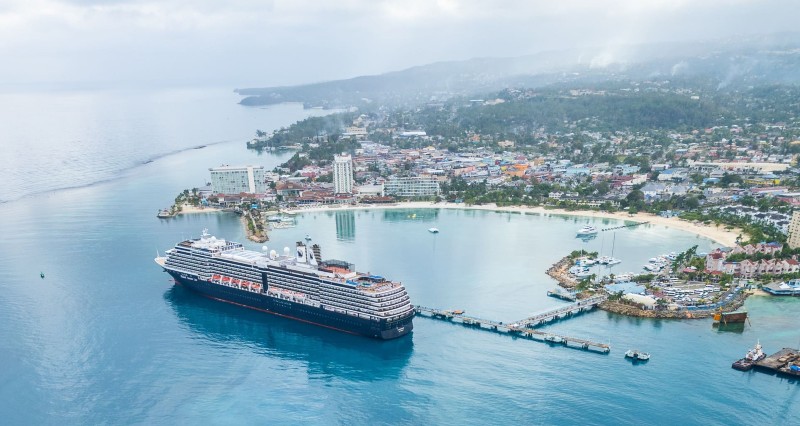
Within two weeks of Hurricane Melissa, all five cruise ports were back up and running. Richard Humphreys of Cruise & Ferry Review magazine finds out more.

Hurricane Melissa, a category five hurricane, hit Jamaica on 28 October 2025. It was a devastating event for the country – Melissa was the strongest recorded hurricane to ever hit the island and led to billions of dollars’ worth of damage, more than 100,000 acres of farmland being destroyed and over half a million people being left without power.

The hurricane also left the tourism industry reeling. In a New York Times article, Jamaica’s minister of tourism estimated the industry lost around $62 million in the first week after the storm. Much of this tourism comes from cruise calls and, given how important the sector is for the island, both the country and the cruise industry have made monumental efforts to not only help locals in their hour of need, but also welcome ships back as soon as possible.

“We had quite a bit of damage on the north coast, but everybody rose to the challenge,” says Joy Roberts, executive director of Jamaica Vacations. “It was hands and hearts together. One of our major attractions, Dunn’s River Falls, was badly affected but we worked hard and it is back open. We managed to reopen 60 per cent of attractions within one week of the storm.”

Within two weeks, all five cruise ports were back up and running, which was crucial for the country as it entered the winter season, a key period for cruising.

“Cruise benefits so many businesses and people, from hotels and restaurants to taxi drivers and crafters,” says Roberts. “Even though many had damage to their homes, they were able to come out and work and make money.”

Continue reading at https://www.cruiseandferry.net/articles/a-story-of-hope-how-the-cruise-industry-helped-jamaica-rebuild. This article first appeared in the Spring/Summer 2026 issue of Cruise & Ferry Review. Subscribe to the free digital edition of the magazine at https://www.cruiseandferry.net/subscribe.


richard humphreysAuthor
Richard Humphreys

Writer, Cruise & Ferry Review

Richard Humphreys works for UK-based publishing company Tudor Rose. He is the News Editor for their golf publications and a regular contributor to their suite of publications for the passenger shipping industry.


Posted in: Allied Member Insights, Blog

Leave a Comment (0) →

Two Islands, One Journey 

grenada careenage


The Caribbean has long been sold one island at a time. Travel sellers can offer something richer by connecting destinations through their culture, cuisine and communities. 

For decades, the Caribbean has often been sold as a choice. One island or another. One resort. One beach. One version of the region. Travel sellers have always had the ability to build multi-island holidays. The opportunity is to make them a more deliberate part of how we present the Caribbean to the world. Because what separates one Caribbean destination from another is not simply a different stretch of sand. It is culture, cuisine and community. 

A short regional flight can take a traveller from one language, history and culinary tradition to another. From one Carnival to another expression of Caribbean culture. From one community’s story to a completely different understanding of island life. That is the real promise of a two-centre Caribbean journey. 

Beyond One Island: Rethinking the Caribbean Holiday

The strongest combinations are not built by adding a second stop to an itinerary. They are designed around destinations that complement each other. 

Each island should deepen the experience and offer something the other does not. Some hotel groups already encourage guests to divide a holiday between properties in different destinations. Travel sellers can take the same principle further, working with tourism boards, hotels and airlines to turn separate bookings into one coherent journey. 

The Power of Connected Experiences

At interCaribbean, our role is connecting YOU and the Caribbean. We link the people and places of the region so travellers can experience more of the Caribbean without treating each island as an entirely separate trip. 

When we do this well, travellers stay longer, spend across more communities and leave with a fuller understanding of the region. 

The Caribbean is often introduced through sun, sea and sand. But the reason people remember it is culture, cuisine and community. 

This is OUR Caribbean. Distinct islands, connected stories, and more than one way to experience them. 


trevor sadlerAuthor
Trevor Sadler
CEO, interCaribbean Airways

Trevor Sadler is Chief Executive Officer of interCaribbean Airways, a regional airline connecting people, places and communities across the Caribbean.


Posted in: 2026 News, Allied Member Insights, Blog

Leave a Comment (0) →

Digital Discovery: How Travelers Are Actually Choosing Destinations Now

palm trees and lack


From Inspiration to Interrogation: Why Real-Time Conversation Is the New Frontier for Destination Marketing

Travelers don’t “search” for destinations anymore. They interrogate them.

Between AI assistants, conversational ads, and content that talks back, the path from curiosity to booking hasn’t just changed—it’s been redefined. For destinations competing for attention, that shift isn’t a threat. It’s an opening. And it’s already happening.

The First Signal: Bermuda Tourism

A recent campaign for Bermuda Tourism across 15 U.S. feeder markets offers a clear read on what’s happening.

Over three months, an AI-powered travel chat—embedded within premium travel content—generated 235,000 impressions, an 11.2% click-through rate, and nearly 40,000 high-intent engagements.

But the real signal isn’t just performance. It’s progression.

CTR didn’t spike—it climbed: 9.0% → 11.0% → 12.1%. Every month. No drop-off.

The takeaway is simple: the more travelers engage with conversational formats, the more they trust them.

But performance isn’t the headline. Behavior is.

When travelers leaned in, their questions clustered fast:

  • What can I do there? (~67%)
  • Where will I stay? (~35%)
  • How do I get there? (~28%)
  • What will I eat? (~16%)

No one is asking if it’s sunny. No one is asking if it’s beautiful. That decision is already made. They’re not discovering anymore—they’re planning.

A Second Proof Point: Visit Tampa Bay

This isn’t isolated.

In a campaign with Visit Tampa Bay, the same pattern emerged—this time with deeper insight across the UK and Germany.

Across 1,992 real traveler interactions:

  • 53% focused on things to do
  • Lodging searches jumped from 25% to 38% as travelers moved closer to booking
  • 21% centered on food and local culture

Different markets. Same behavior.

But here’s the shift: Tampa Bay didn’t just get campaign performance—they got real-time research.

Through Tiki’s Envoy platform, they captured insights traditional methods can’t match:

  • Scale: thousands of real interactions vs. limited survey panels
  • Quality: actual travelers actively planning trips
  • Speed: 3 weeks vs. 3–6 months

And most importantly—real questions, asked at the exact moment decisions are being made.

Questions like: “Where exactly is Tampa Bay?” and “Is it still worth visiting?”

That’s not data you analyze months later. That’s direction you act on now.

What This Means

The takeaway is clear:

  • Lead with experiences — that’s where travelers start
  • Simplify lodging and logistics — that’s where they go next
  • Use food and culture to differentiate — that’s what they remember
  • Show up when the question is asked — that delivers on their expectations.

Closing Thought

Travelers are telling us exactly what they want. Not in reports, or in surveys, but in questions. The destinations that listen and respond in the moment will close the gap between inspiration and booking faster than the rest.


scott schult TIKiScott Schult
VP Destination Strategy, Tiki

Scott is a travel technology strategist focused on digital transformation, AI strategy, and marketing innovation. He is known as a thought leader in the tech space, often sharing insights on the intersection of leadership, technology, and tourism strategy.


Posted in: 2026 News, Allied Member Insights, Blog

Leave a Comment (0) →

How Youth Cricket is Helping Grow Sports Tourism in Tobago

TCA Sports 1-800


How youth cricket is attracting international visitors, supporting local communities and creating lasting tourism benefits for Tobago. 

Sports tourism is one of the fastest-growing sectors of the global travel industry, offering destinations an opportunity to diversify their visitor economy while creating lasting benefits for local communities. 

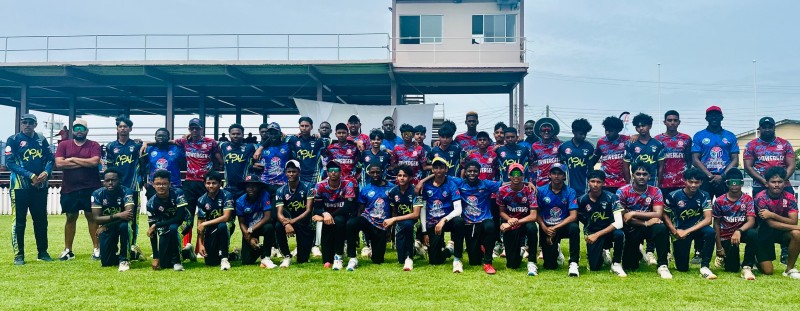
Tobago is demonstrating how youth sport can play an important role in achieving exactly that. The 2026 Tobago Trophy marked the second year of the Global Cricket Series (GCS) in Tobago. Built through collaboration between the Tobago Cricket Association, tourism partners and the Global Cricket Series, the event welcomed 10 teams from the UK, USA and across the Caribbean. Around 160 players and coaches travelled to the island, accompanied by a similar number of parents and supporters. 

Staying for 9–10 nights, they generated more than 3,000 visitor nights, supporting hotels, restaurants, transport providers, attractions and local businesses throughout their stay. 

Beyond the Boundary: Economic Impact on Local Communities

The benefits extend far beyond the cricket field. Families experience Tobago’s beaches, culture and hospitality, while organised excursions and free time encourage visitors to explore the island and contribute directly to the local economy. 

For many, it is their first visit to Tobago, creating an opportunity to showcase the destination to a new international audience and encouraging future holidays, repeat visits and word-of-mouth recommendations. 

A Digital Legacy: Authentic Marketing Through Player and Family Networks

The event also creates a lasting digital legacy. Players, parents and supporters share thousands of photographs and videos across social media, providing authentic destination marketing that reaches schools, clubs and families around the world.

This genuine visitor advocacy is often more powerful than traditional advertising in inspiring future travel. Importantly, sports tourism also creates opportunities for local people. Tobagonian players gain valuable experience competing against visiting teams, while local coaches, umpires, scorers, volunteers and transport providers all play an important role in delivering the event. 

From the Pitch to the Classroom: Grassroots Cricket Development

GCS also delivers coaching sessions in local primary schools, ensuring tourism contributes to grassroots cricket. The opportunities can even be life changing.

Following last year’s tournament, Tobago player Fabrice Lynch secured a scholarship to an independent school in the UK, where he will begin his studies this September. The success of the Tobago model has provided a blueprint for wider regional collaboration. GCS is now working with partners in Saint Lucia and Saint Vincent and the Grenadines to develop similar youth cricket events that attract international visitors while strengthening local cricket. 

Scaling the Model: Expansion to Saint Lucia and Saint Vincent

The inaugural Saint Vincent programme will feature Under-19 boys’ and girls’ competitions, welcoming visiting teams including Sedbergh School, Harry Brook’s former school, Oakham School, where Stuart Broad was educated, Surrey County Cricket Club representative teams for both boys and girls, and a GCS Franchise Team led by former England international and former Leicestershire CCC coach Philip DeFreitas. 

As Caribbean destinations continue to diversify their tourism offering, youth sport has the potential to become an increasingly valuable part of the visitor economy. 

The Future of Youth Sport in Caribbean Tourism

Tobago’s experience demonstrates how strong partnerships, meaningful visitor experiences and community engagement can deliver benefits that extend well beyond the final day of competition, creating lasting value for tourism, local sport and the wider community.


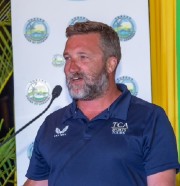
chris berryAuthor
Chris Berry
CEO, TCA Sports Tours

Founder of the Global Cricket Series, working with destinations across the Caribbean to develop international youth cricket events that drive sports tourism, support local communities and inspire the next generation of cricketers.

Posted in: Allied Member Insights, Blog

Leave a Comment (0) →
Page 1 of 4 1234